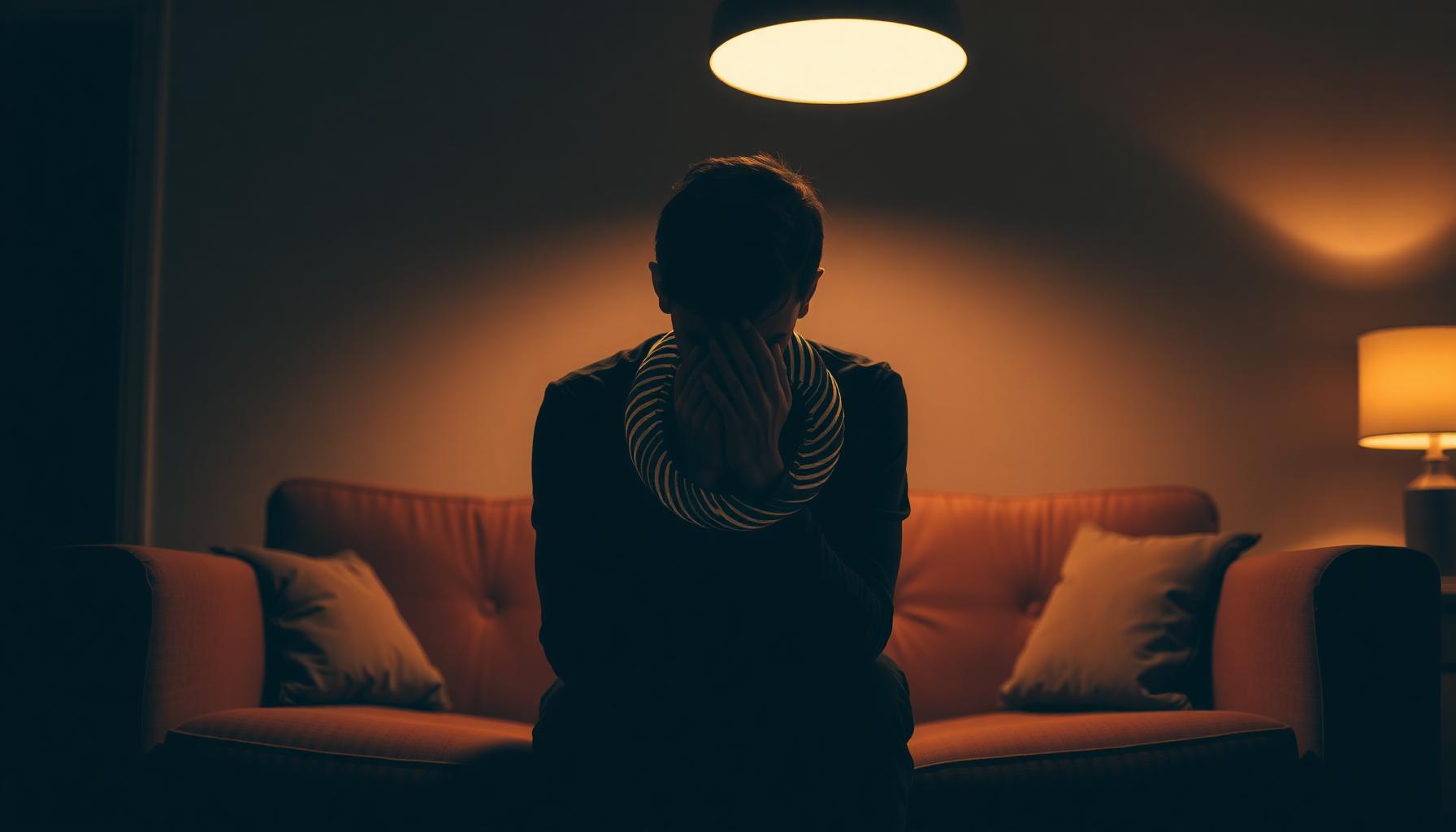
The Anxiety-Addiction Loop: Why Your Loved One Can't Just "Calm Down and Stop"
I used to drink to quiet the noise in my head. Not the fun, celebratory kind of drinking — the kind where you're sitting alone at 11 p.m., heart racing over nothing in particular, and your brain is absolutely convinced the world is ending. The bottle was reliable. It worked. For about three hours.
Then I'd wake up at 3 a.m., and the noise was back — louder, meaner, and now accompanied by genuine physical misery. So I'd do it again the next night. And the night after that. For years, I thought I had a drinking problem. Turns out I had an anxiety problem, and drinking was my terrible, highly effective short-term solution to it.
If your loved one is struggling with anxiety and addiction, this is the piece I wish someone had put in front of my family twenty years ago.
What Does the Anxiety-Addiction Loop Actually Look Like?
The anxiety and addiction connection is a self-reinforcing cycle: anxiety drives substance use, substance use temporarily relieves anxiety, withdrawal then creates more anxiety, which drives more substance use. Understanding this loop is the single most important thing families can learn about why quitting is so much harder than it looks from the outside.
Here's the brutal reality. Alcohol, opioids, benzodiazepines, and even stimulants can all produce a temporary "off switch" for anxious thoughts. The brain, which is nothing if not a relentlessly efficient machine, notices this and files it under "things that work." The problem is that alcohol suppresses GABA (the brain's calming chemical) and cranks up cortisol (the stress hormone) during withdrawal. So after the relief comes a rebound — more anxiety than before, which makes the next drink feel even more necessary.
I did not understand any of this while I was in it. I just knew that without a drink, I felt like I was crawling out of my skin. If your loved one says something similar, they're not being dramatic. That's the chemistry talking.
Why Does "Just Stop" Completely Miss the Point?
Telling someone with undiagnosed anxiety and addiction to "just stop" is a bit like telling someone with a broken leg to walk it off. The logic sounds reasonable from the outside. From the inside, it's physically impossible — and the suggestion, however lovingly meant, tends to send people deeper into shame rather than toward help.
Here's what families often don't realize: for a lot of people struggling with anxiety and addiction, the substance isn't the primary problem. It's the solution to a problem that nobody has addressed yet. When you take away the solution without treating the underlying anxiety, you haven't removed the reason they were using. You've just removed the only coping tool they had — however destructive that tool was. I watched people in early recovery white-knuckle it through six months of sobriety only to relapse spectacularly, not because they didn't want to be sober, but because no one had touched the anxiety that was running the show. Treatment without mental health support is, in a lot of cases, a half-measure.
What Are Families Missing — and Why Is It Not Their Fault?
Anxiety as a driver of addiction is frequently invisible to families because anxiety in someone with addiction often looks like other things: irritability, avoidance, unpredictability, making excuses, lying about where they've been. It doesn't look like what most people picture as "anxiety" — it doesn't come with a self-report and a diagnosis stamped on the forehead.
Many family members I've talked with over the years describe the same pattern. Their loved one uses, they get angry, they plead, they set consequences, the person sobers up for a while, then something happens — some kind of stress or conflict or even just an unexplained "bad week" — and they're back at square one. That stress trigger is often anxiety. An untreated anxiety disorder doesn't take a break just because someone stops drinking.
You didn't cause the anxiety. You can't cure it. But understanding it changes how you respond — and changes what kind of help actually makes sense to push for.
How Often Does Undiagnosed Anxiety Drive the Addiction Cycle?
Co-occurring anxiety and addiction — what clinicians call a dual diagnosis — is far more common than most people realize. Studies consistently show that roughly 20% of people with an anxiety disorder also struggle with substance use disorder, and the reverse is equally true. Yet historically, treatment programs separated the two: treat the addiction first, then figure out the mental health piece.
That approach, thankfully, is changing. But it's still not universal. If you're looking at treatment options for a loved one, it's worth asking directly: "Do you treat co-occurring anxiety or other mental health conditions alongside the addiction?" If the answer is vague or no, that's important information.
In my own case, I didn't get a formal anxiety diagnosis until several years into sobriety. Looking back, it was the missing piece of the puzzle I'd been trying to solve with alcohol for fifteen years. Medication and therapy didn't make me weak. They made sobriety actually sustainable.
What Can Families Actually Do When Anxiety and Addiction Are Both in the Room?
There's no magic script, but there are some genuinely useful moves families can make when anxiety is part of the equation.
- Name it without diagnosing it. Instead of "You have anxiety," try "I've noticed that certain situations seem to really wind you up. Has that always been the case for you?" Open a conversation, not a courtroom.
- Push for dual-diagnosis treatment. When researching rehab or outpatient programs, ask specifically whether they have licensed mental health clinicians — not just addiction counselors — on staff.
- Don't mistake anxiety for manipulation. A loved one who backs out of commitments, avoids social situations, or escalates at the slightest confrontation may be managing a lot of internal chaos. That doesn't mean there are no consequences to behavior — it means understanding the why changes how you deliver them.
- Take care of your own nervous system. Living with someone whose anxiety is running hot is exhausting. Families often absorb the second-hand stress without realizing it. Your own mental health matters here, too.
The Reason I Talk About This Stuff
Twenty-three years sober, and I still have anxiety. I've just stopped using bourbon as the treatment plan. The work I do now with families in crisis — through Freedom Interventions and through the Party Wreckers podcast — is deeply personal to me, because I know what it's like to be the person your family is scared for.
I also know that when families understand what's actually happening — when they stop seeing addiction as a moral failure and start seeing it as a complex response to unmet needs — everything changes. The conversations change. The approach to treatment changes. And sometimes, the outcome changes too.
You deserve real information. Your loved one deserves real help. That's why I'm here. Listen to the Party Wreckers podcast at PartyWreckers.com — real conversations about addiction, recovery, and the families caught in the middle.
Frequently Asked Questions About Anxiety and Addiction
Can anxiety cause addiction?
Anxiety doesn't directly "cause" addiction, but it's a powerful risk factor. People with untreated anxiety often self-medicate with alcohol, opioids, or other substances that temporarily reduce anxious feelings. Over time, the brain adapts to these substances, creating dependence. The anxiety and addiction then reinforce each other in a cycle that gets harder to break without treating both.
How do I know if my loved one has anxiety and not just addiction?
You probably can't know without a professional evaluation — and that's okay. Watch for patterns: does your loved one's substance use spike around specific stressors, social situations, or conflict? Do they describe feeling "wired" or unable to relax even when sober? These are worth raising with a clinician. A proper dual-diagnosis assessment will sort out what's happening.
What is dual diagnosis treatment and does my loved one need it?
Dual diagnosis treatment addresses both a substance use disorder and a co-occurring mental health condition — like anxiety, depression, PTSD, or bipolar disorder — at the same time. If your loved one has anxiety and addiction, integrated dual-diagnosis care is significantly more effective than treating only the addiction. Ask any treatment program you contact whether they offer co-occurring mental health treatment.
Why does my loved one seem more anxious when they try to quit?
This is likely withdrawal-related rebound anxiety — a real, biological phenomenon. Substances like alcohol and benzodiazepines suppress the brain's natural calming mechanisms, and when those substances are removed, the brain overcorrects in the other direction, producing intense anxiety. This is one of the main reasons medically supervised detox is so important — and why quitting "cold turkey" from some substances can be genuinely dangerous.
Can someone fully recover from both anxiety and addiction?
Yes — and I'm living proof. Recovery from co-occurring anxiety and addiction is absolutely possible with the right support. It typically involves a combination of therapy (especially CBT or EMDR for anxiety), medication if appropriate, peer support, and time. It's not a straight line, and managing anxiety is usually an ongoing practice — but a meaningful, sustainable sober life with anxiety is entirely achievable.
How can I support a family member with anxiety and addiction without enabling them?
The line between support and enabling is one of the hardest to walk. In general: supporting means helping someone access appropriate help and holding boundaries around behaviors that harm you. Enabling means protecting someone from consequences in ways that allow the addiction to continue. Understanding that anxiety is part of the picture helps you respond with more compassion — but compassion doesn't mean absorbing the damage. A good family therapist or interventionist can help you find the balance.