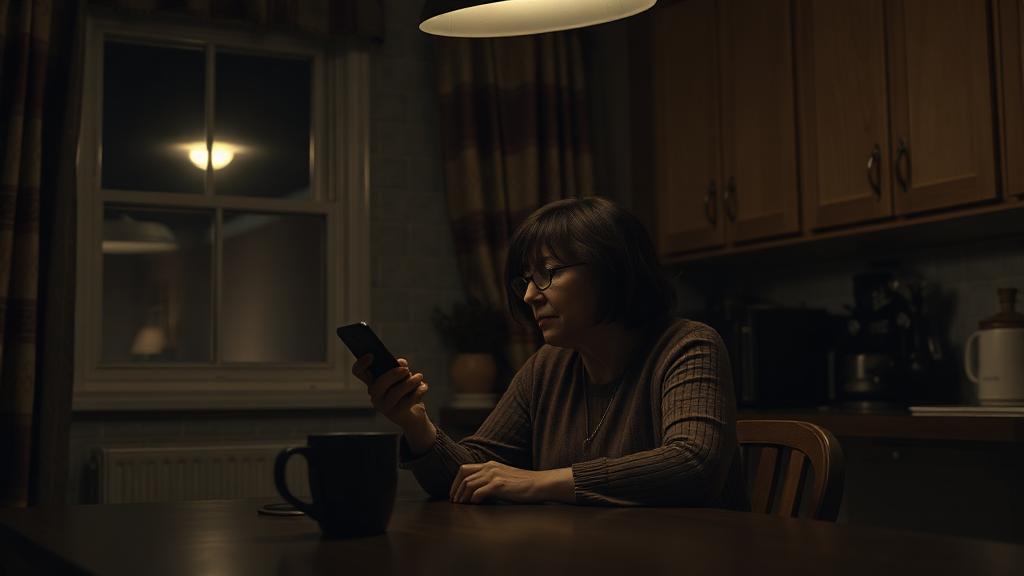
The call comes at 2 a.m. again.
For the Mercer family, it has become a ritual they never asked for — one that began three years ago when their youngest son, Daniel, started using opioids after a knee surgery and never found his way back. Tonight, it's Daniel calling from a gas station twenty minutes away, out of money, asking his mother, Karen, for a ride. She already knows what that means.
She goes anyway.
This is what active addiction looks like from the inside of a family — not the dramatic scenes from television movies, but the grinding, exhausting, quietly devastating reality of loving someone who is sick and unable to stop.
The Slow Erosion of Normal
Families rarely notice the shift all at once. It begins with small things: money going missing from a wallet, a withdrawn mood that gets explained away as stress, cancelled plans, stories that don't quite add up. By the time most families recognize what is happening, they have already been reorganizing their lives around it for months — tiptoeing around volatility, covering for absences, filling in the gaps left behind.
Karen describes the feeling as "always waiting for the other shoe to drop." Her husband, Tom, stopped sleeping through the night. Their older daughter, Alicia, moved out early, partly to escape the tension. The family dinner table — once loud and ordinary — became a careful performance, everyone watching Daniel for signs of how the evening might go.
Addiction doesn't just affect the person using. Research consistently shows that family members of people with substance use disorders experience elevated rates of anxiety, depression, and trauma-related symptoms. The household becomes organized around one person's illness, and everyone else adjusts their life accordingly — sometimes without realizing they've done it.
The Language of Survival: Enabling and Codependency
One of the most painful lessons families learn is the difference between helping and enabling — and how blurry that line can be when you love someone.
Karen paid Daniel's rent three times when he lost jobs due to his using. She told herself she was keeping him safe, keeping a roof over his head. What she eventually came to understand, with the help of a therapist, was that removing consequences — however lovingly — can remove the very pressure that sometimes motivates people to seek change. The term "enabling" often makes family members feel like they are the problem. In reality, it simply describes the way love gets tangled up with survival instincts.
Codependency — a pattern in which a family member's emotional state becomes fused with the addicted person's behavior — is extraordinarily common. When Daniel was sober for two weeks, Karen was hopeful and light. When he relapsed, she collapsed with him. Her wellbeing had become tethered to his. Therapists who work with families describe this as one of the most destructive dynamics in the long arc of addiction, not because family members are weak, but because this kind of attunement is what love often looks like, carried too far.
The Exhaustion of Repeated Hope
Relapse is not a failure of treatment. It is a statistically expected part of recovery from a chronic illness — something clinicians and researchers understand well. But for families who have celebrated a two-month sobriety milestone, helped their loved one move into a new apartment, and watched them start to look like themselves again, relapse feels like devastation. Again.
The Mercers have been through five cycles of this. Each one began with something that felt like genuine possibility. Each one ended with a phone call.
What families often describe after multiple relapses is not just grief, but a strange kind of protective numbness — a reluctance to invest in hope because hope has become something that hurts. Therapists who work in this field call it "compassion fatigue." Parents, siblings, and spouses begin to preemptively grieve. They brace. They wait for the crash even during the good stretches. That hypervigilance takes a measurable physical toll: elevated cortisol, disrupted sleep, impaired immune function.
"I don't know how to feel happy for him anymore," Alicia admitted about her brother. "I want to. But I'm always waiting."
When to Hold On, When to Let Go
Perhaps no question torments families more than this one. When does continued support cross into harm? When does tough love help, and when does it just punish someone for being sick?
There are no clean answers. What addiction specialists generally emphasize is that families cannot force recovery — no amount of love, ultimatums, or sacrifice can make another person get well before they are ready. What families can do is protect themselves, set boundaries that preserve their own mental and physical health, and remain available without becoming consumed.
Al-Anon, a support group for families and friends of people with alcohol and substance use disorders, offers a framework built around this principle — not abandonment, but detachment with love. The goal is to stop managing the addicted person's life while staying emotionally present. It is harder than it sounds.
Tom Mercer started going to Al-Anon six months ago. He says it is the first time he has felt understood by people who know what it actually looks like inside a home shaped by addiction. "Everyone there just gets it," he says. "You don't have to explain yourself."
What Families Need
Support for the family members of people in active addiction remains chronically underfunded and underemphasized in the broader conversation about the addiction crisis. Treatment programs are increasingly recognizing family involvement as a clinical priority — not just because family support improves outcomes for people in recovery, but because family members are suffering too, and they deserve care in their own right.
What helps families most, according to clinical research and the accounts of thousands of people who have been through it, tends to include access to peer support groups like Al-Anon or Nar-Anon, individual therapy with a clinician experienced in substance use disorders, clear and compassionate information about the science of addiction, and community — connection with others who understand without judgment.
Karen Mercer is still driving to that gas station, still going at 2 a.m. She is also, for the first time, in therapy herself. She has started telling the truth about what her life looks like to friends who didn't know. She is learning, slowly, that her own pain is real and worth attending to — not as a betrayal of Daniel, but alongside her love for him.
"I used to think that if I just tried harder, cared more, found the right thing to say, I could fix him," she says. "Now I understand that's not how it works. I can love him and not save him. That's the hardest thing I've ever had to learn."
If you or someone you love is struggling with addiction, resources are available:
- SAMHSA's National Helpline: 1-800-662-4357 (free, confidential, 24/7)
- Al-Anon: al-anon.org
- Nar-Anon: nar-anon.org