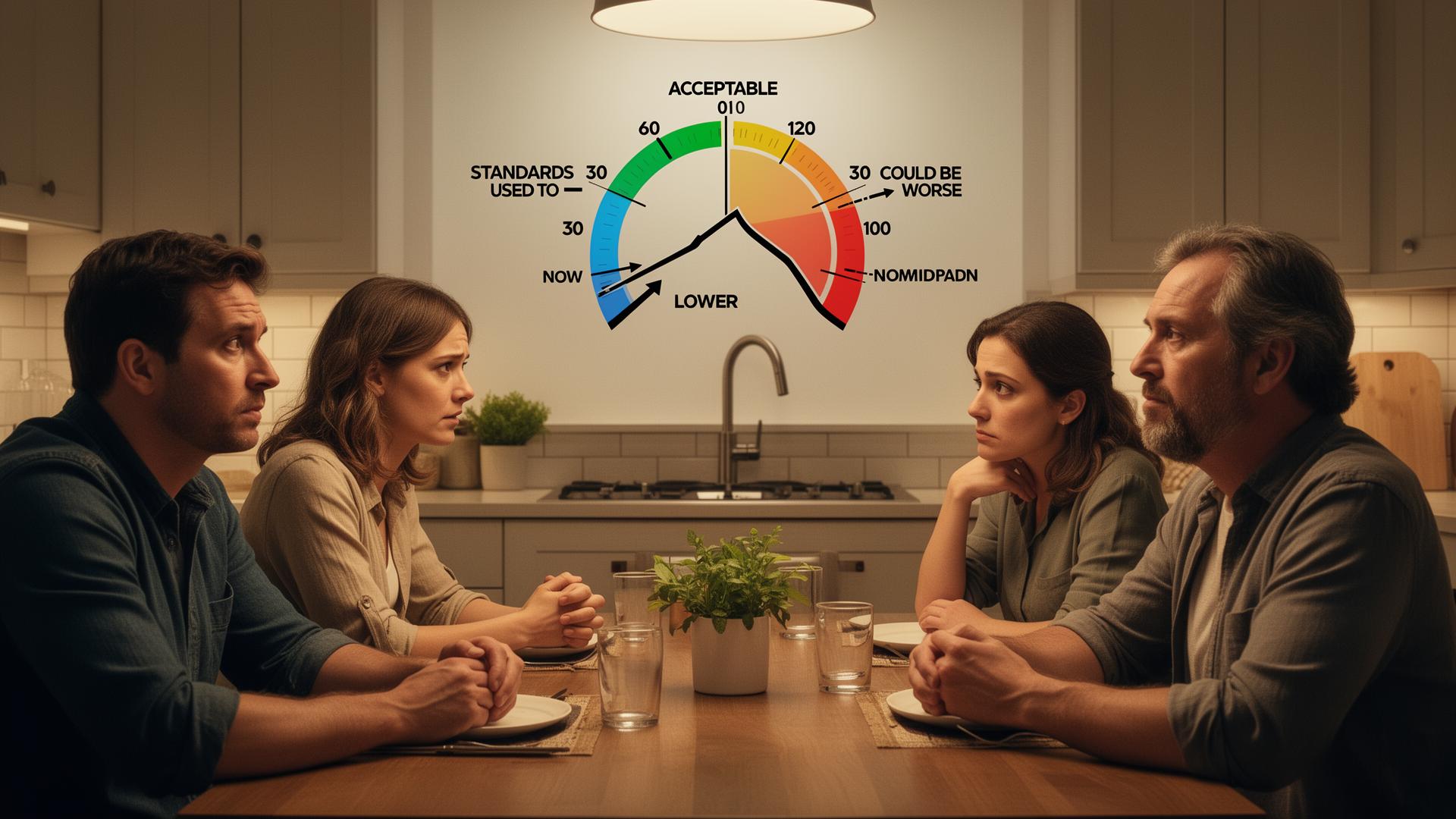
Families dealing with addiction often comfort themselves with a familiar phrase: "At least it's not as bad as it used to be." Fewer crises. Fewer blowups. Less chaos. It sounds like progress. In reality, comparison thinking is one of addiction's most effective survival strategies—quietly resetting what feels acceptable while risk continues to grow.
The Sentence That Sounds Reasonable—and Isn't
"At least they're not drinking every day anymore."
"At least there haven't been any arrests."
"At least they're still working."
On the surface, these statements sound grounded. Rational, even. Compared to what came before, things are calmer.
Here's the problem: comparison thinking doesn't measure health—it measures relief.
Relief feels good. It lowers anxiety. It gives families a chance to breathe. But relief is not the same thing as stability, and it's definitely not the same thing as recovery.
Addiction doesn't need chaos to survive. It just needs standards to quietly drop.
How Addiction Resets the Baseline
One of addiction's most underrated skills is normalization.
What once felt unacceptable slowly becomes tolerable:
- Missed commitments become expected
- Mood swings become "just how they are"
- Broken promises become less shocking
- Dishonesty becomes background noise
Families don't wake up one day deciding to accept more dysfunction. The baseline shifts gradually—usually after a crisis.
Once things improve a little, comparison kicks in:
"This is better than before."
And just like that, the new normal is set.
Why Comparison Feels Like Logic
Families aren't foolish for thinking this way. Comparison feels logical because it's how humans reduce fear.
When chaos decreases:
- Nervous systems calm
- Vigilance drops
- Urgency fades
Families compare today to the worst moments—not to what's actually healthy or sustainable.
Addiction benefits enormously from this shift. It doesn't need families to believe things are good. It just needs them to believe things are better enough to stop pushing.
"Better Than Before" Is Not a Goal
Here's the uncomfortable truth:
"Better than before" is not a meaningful benchmark when before was already unsustainable.
If the measuring stick is:
- "Not homeless"
- "Not arrested"
- "Not overdosed"
- "Not fired"
…then the bar is underground.
Addiction doesn't need improvement. It needs interruption.
How Families Get Trapped in Sliding Standards
Sliding standards happen quietly.
First, families say:
"At least they're not using as much."
Then:
"At least they're honest sometimes."
Then:
"At least they answer the phone."
Eventually:
"At least we know where they are."
Each adjustment feels small. Reasonable. Compassionate.
But taken together, these shifts create a system where less is required over time, not more.
That's not recovery. That's accommodation.
Why Minimization Feels Kinder Than Confrontation
Minimization often masquerades as kindness.
Families worry:
- "I don't want to be dramatic."
- "I don't want to overreact."
- "I don't want to push them away."
So they downplay concern. They soften language. They accept explanations they wouldn't have accepted before.
This isn't because families are weak. It's because confrontation feels risky—and comparison offers emotional safety.
Addiction thrives in that safety.
The Trap of "Other People Have It Worse"
Comparison doesn't just happen within the family—it happens outward.
Families say:
- "At least they're not like that person."
- "We know families who have it way worse."
- "Compared to others, this isn't that bad."
But addiction doesn't care about other people's rock bottoms.
Someone else's tragedy does not make your situation safer.
Risk is not reduced by comparison. It's reduced by action.
How Calm Periods Get Misread as Progress
One of the most dangerous moments in addiction is when things are quiet.
No emergencies.
No blowups.
No obvious consequences.
Families interpret calm as stability.
In reality, calm often means:
- The family is compensating well
- Standards have adjusted
- Pressure has eased
Addiction doesn't need to escalate when the environment is comfortable.
Quiet does not equal healthy. It often just means less friction.
Why Families Sense Something's Wrong—But Don't Act
Most families feel when something isn't right.
They notice:
- The same patterns repeating
- Promises that don't quite land
- A sense of stagnation
- Emotional exhaustion creeping back
But comparison shuts that intuition down.
"It's not bad enough yet."
That sentence keeps families waiting—often longer than they realize.
What Actually Matters More Than Comparison
Instead of asking:
"Is this better than before?"
More useful questions are:
- Is this stable under stress?
- Is responsibility increasing or decreasing?
- Is accountability clearer or fuzzier?
- Is the family doing more—or less—over time?
These questions don't rely on past chaos as the measuring stick. They measure direction.
A Reality Check (Party Wreckers Style)
If "at least it's not as bad" were a legitimate recovery strategy, interventionists would retire and addiction would quietly solve itself as long as things didn't get catastrophic.
That's not how this works.
Addiction doesn't collapse because families waited long enough.
It changes when the system around it stops adapting.
What Families Can Do Instead of Comparing
Families don't need to panic. They do need to stop minimizing.
That looks like:
- Naming patterns honestly
- Refusing to lower standards further
- Aligning responses across the family
- Seeking outside perspective before exhaustion sets in
You don't need disaster to justify concern. You need clarity.
Final Takeaway
"At least it's not as bad" feels comforting—but it's one of the most dangerous sentences in addiction.
It shifts focus from health to relief.
From direction to comparison.
From action to waiting.
Addiction doesn't require things to get worse to survive. It only requires families to stop expecting better.
And the moment families stop measuring progress against past chaos—and start measuring it against reality—is often the moment things finally begin to change.