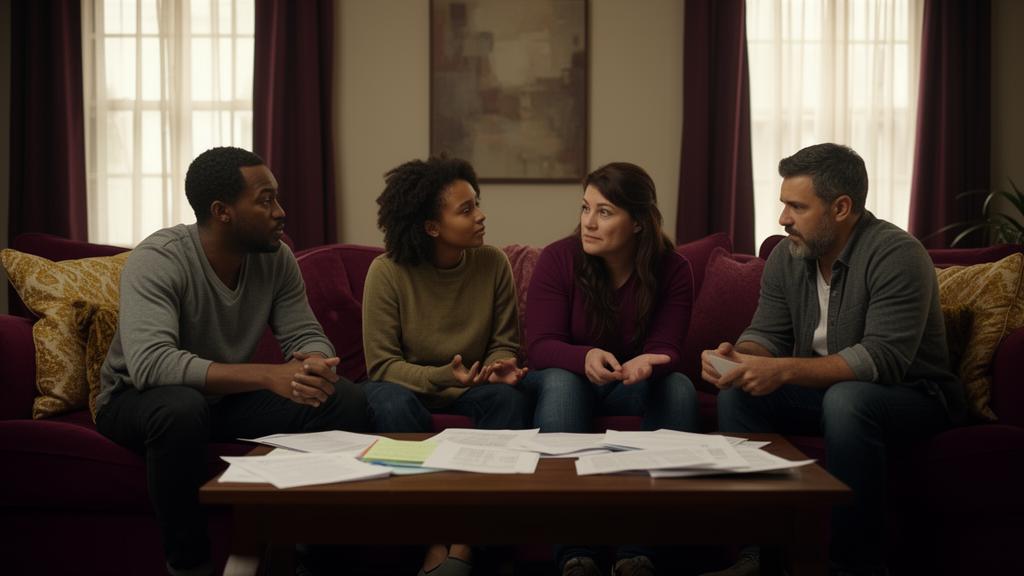
You know something needs to change. You've watched someone you love disappear into their addiction — the missed birthdays, the broken promises, the fear every time your phone rings late at night. You're ready to do something. But when you sit down to think about the actual intervention, one question freezes you in your tracks:
What do I even say?
It's the most common thing families ask me before an intervention. And it makes sense — the stakes feel impossibly high. Say the wrong thing and your loved one walks out. Say nothing and nothing changes.
This guide gives you the practical framework professional interventionists use: what to say, how to say it, what to avoid, and how to prepare so that when the moment comes, your words land with love and purpose — not anger or chaos.
First: Understand What an Intervention Is Actually For
Most people think an intervention is about confronting someone with a list of their failures. TV has done a lot of damage here. The classic image — a semicircle of crying people ambushing an addict — often does more harm than good.
A well-run intervention is not a confrontation. It is a structured, rehearsed conversation designed to do three things:
- Help your loved one see, clearly and compassionately, how their addiction is affecting the people who love them.
- Present a specific treatment plan and ask them to accept it immediately.
- Set clear, loving consequences if they choose not to accept help.
Key Insight from the Field
The goal is not to "win" the conversation. The goal is to open a door wide enough that your loved one can walk through it — even if they're scared. When families walk in ready to fight, the intervention almost always fails. When they walk in ready to love, the odds shift dramatically.
Step-by-Step: How to Prepare What You're Going to Say
Step 1: Write Your Impact Statement — Not a List of Grievances
Your impact statement is the heart of what you'll say. It is NOT a timeline of every bad thing that's happened. It is a personal, specific, emotionally honest expression of what their addiction has cost — and what you're hoping for.
A strong impact statement follows this structure:
- One or two specific memories or incidents (not a list — pick the most meaningful)
- How those moments made you feel — using "I" statements, not accusations
- A statement of love and belief in their ability to recover
- A direct ask: "I am asking you today to accept the help we've arranged."
Sample Script — Feel free to adapt this
"I want to start by telling you that I love you. That hasn't changed. But I have to be honest with you about what I've been experiencing.
Last Thanksgiving, when you came to dinner and you were barely able to stay awake at the table — I watched our kids look at you, and then look at me, and I had no words for them. That moment broke something in me.
I'm not saying this to hurt you. I'm saying this because I believe you deserve better than this, and I believe the person I married is still in there.
We've made arrangements at [treatment center name]. Everything is ready. Today, I am asking you to say yes — not for me, not for the kids, but because your life matters and there's a way out of this."
Step 2: Write Your Consequences — And Mean Every Word
This is where most families stumble. Every person at the intervention must be prepared to state what they will stop doing if their loved one refuses help. This is not a threat — it is a loving boundary.
Common examples include:
- "I will no longer give you money or cover your bills."
- "You will need to find another place to live."
- "I will not attend family events with you while you're actively using."
The critical rule: do not say anything you are not fully prepared to follow through on. Empty consequences teach your loved one that you don't mean what you say — and it erodes the foundation of the entire process.
From the Trenches
I've sat in hundreds of interventions. The ones that fail almost always fail at this step — someone threatens a consequence they're not ready to enforce, the person in addiction calls their bluff, and the whole structure collapses. Prepare your consequences carefully. Say only what you'll actually do.
Step 3: Rehearse Out Loud
Reading your statement silently is not enough. You need to say it out loud — ideally in front of the other team members — before the real intervention happens. You'll be surprised how different it sounds when you hear yourself say it, and how emotions you thought were under control suddenly surface.
Rehearsal helps you:
- Identify and prepare for moments where you might lose your composure
- Ensure your tone stays loving, not accusatory
- Time out the full intervention so it doesn't run too long (45–90 minutes is the sweet spot)
What NOT to Say at an Intervention
What you leave out of an intervention matters as much as what you include. Here are the phrases and patterns that most often derail a family intervention:
Avoid Accusatory "You" Statements
"You ruined our vacation." "You never think about anyone but yourself." — These put your loved one on the defensive immediately. Replace every "you" accusation with an "I" feeling statement.
Instead of: "You embarrassed me at the wedding."
Try: "When what happened at the wedding occurred, I felt humiliated and scared, and I didn't know how to explain it to people I care about."
Avoid Bringing Up Old Arguments
An intervention is not the time to relitigate old fights. If a team member has unresolved resentments, they may need to process those separately — before the intervention — so those feelings don't hijack the room.
Avoid Ultimatums That Are Actually Bluffs
If you say "I'm leaving you if you don't go to treatment" and you're not actually prepared to leave, don't say it. Your loved one, regardless of how impaired they are, will often sense the difference between a genuine boundary and a performance.
Don't Wing It
Improvising in an intervention almost never works. High emotion, long silences, tangents — these erode the focused, intentional energy the process needs. Write it down. Practice it. Stick to it.
Do You Need a Professional Interventionist?
This is a question worth addressing honestly. Not every family does — and not every family can afford one. But here's a clear breakdown to help you decide:
Consider a professional interventionist if:
- Your loved one has a history of violence or volatile reactions
- There are co-occurring mental health conditions alongside the addiction
- Previous intervention attempts have failed
- The family is deeply divided or has significant conflict among team members
- You're dealing with severe physical dependence that may require immediate medical supervision
A family-led intervention can be appropriate if:
- The addiction is caught early and the person has some acknowledgment of the problem
- The family is relatively unified and not in significant conflict
- The person is not physically dangerous or a serious flight risk
About Party Wreckers
Matt Brown and the Party Wreckers team offer Intervention on Call — a way to get professional guidance without the full cost of an in-person interventionist. One-hour coaching sessions are available for families who want expert support to prepare their intervention. Learn more at partywreckers.com.
Quick Reference: What to Say at Each Stage
Opening (by the lead speaker):
"[Name], we're here because we love you and we're scared. Nothing we say today comes from anger. It comes from wanting you to live."
During each person's statement:
Each person reads their prepared impact statement. Keep statements to 2–3 minutes maximum. No interruptions, no debate.
The ask:
"We've arranged a spot at [treatment center]. It's ready today. We are asking you — right now — to accept this help. Will you go?"
If they say yes:
Move immediately. Do not delay to "let them say goodbye" or "get a few things." Have a bag packed if possible. Every hour of delay is a risk.
If they say no:
Each team member calmly states their consequence. Do not argue, beg, or negotiate. Leave together. Follow through.
You Don't Have to Do This Alone
Preparing for an intervention is one of the most emotionally demanding things a family can do. The fact that you're researching it, thinking about the words, and trying to do it right — that already says a great deal about how much you love this person.
If you want guidance from a professional before you sit down with your loved one, Matt Brown and the Party Wreckers team are here to help. Whether you need an hour of coaching, support for the whole team, or just someone who gets it — reach out.
Resources:
- Party Wreckers Intervention Coaching: partywreckers.com
- Association of Intervention Specialists: associationofinterventionspecialists.org
- SAMHSA National Helpline: 1-800-662-4357 (free, confidential, 24/7)
- Freedom Interventions: freedominterventions.com
References & Further Reading:
- Mayo Clinic – Intervention: Help a loved one overcome addiction (2023)
- SAMHSA – Alcohol, Tobacco and Other Drugs Resource Guide (2024)
- American Addiction Centers – How to Stage a Drug or Alcohol Intervention (2024)
- Johnson, V.E. – Intervention: How to Help Someone Who Doesn't Want Help (1986, Johnson Institute)