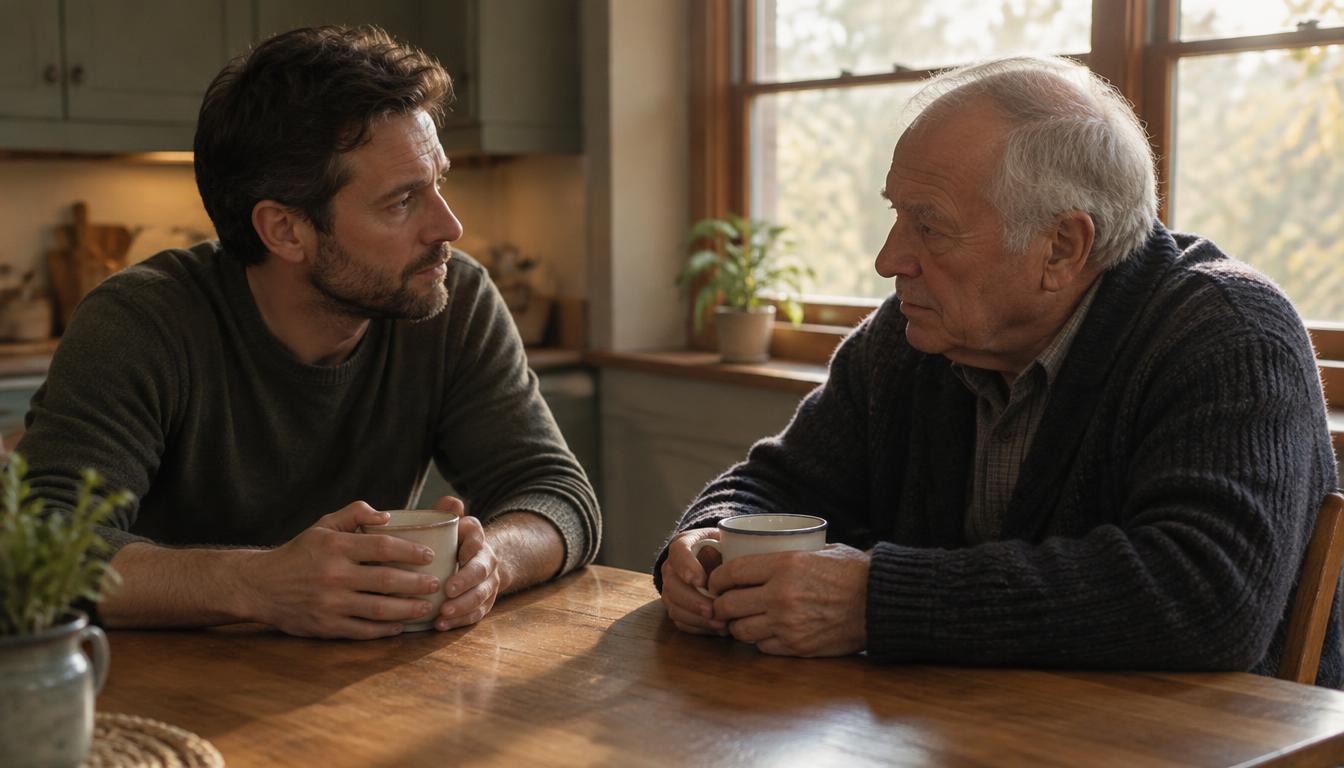
A few years ago I sat in a living room with three generations of one family. The grandfather was ninety days sober and leaning on a cane. His son, the father, was sitting with his arms crossed, insisting his own drinking was "nothing like Dad's." And the grandson, twenty-four years old, was the reason we were all there.
About an hour in, the grandfather said something I've never forgotten: "I thought it would stop with me." The room went quiet. The father uncrossed his arms. That was the moment the intervention actually started.
Generational addiction is what happens when drinking or drug use moves down a family tree like a family heirloom nobody wants. I've also seen it stop. Here's what I've learned about why it gets passed down, and what breaks the chain.
What Is Generational Addiction?
Generational addiction is a pattern where substance use disorders show up across two or more generations of the same family. It's driven by a mix of genetics, learned behavior, unresolved trauma, and family rules about what gets talked about and what doesn't. Having it in your family raises your risk. It doesn't seal your fate.
Researchers estimate that genes account for roughly half of a person's risk for addiction. That's real, and families should know it. But I always tell people the other half matters just as much, because the other half is the part you can actually do something about.
When I was drinking, I thought I was a uniquely complicated guy with uniquely good reasons. It took getting sober to look back and see how many of my habits, my hiding, and my excuses weren't original. They were inherited ways of coping, passed down as quietly as a last name.
How Does Addiction Get Passed Down in Families?
Addiction gets passed down through three main channels: biology, behavior, and silence. Kids inherit genetic sensitivity, they watch how adults handle stress, and they learn which subjects are off-limits. Most families focus on the first and ignore the other two.
The Biology
Some people's brains respond to alcohol and drugs more intensely from the very first use. If your parent or grandparent struggled, you may be wired with less of a brake pedal. That's useful information, like knowing heart disease runs in your family.
The Behavior
Kids learn what adults do, not what adults say. If every hard day ended with a drink, if every celebration needed a buzz, if pain was handled by numbing it, children absorb that as the normal way to be a person.
The Silence
This is the one I see most in interventions. The family has a rule nobody wrote down: we don't talk about Grandpa's drinking, we don't mention Uncle Ray, we say Mom is "tired." That silence teaches the next generation that addiction is something to hide, which is exactly the environment addiction loves.
Signs Generational Addiction Is Repeating in Your Family
The clearest sign is when the same excuses, family roles in addiction, and secrets show up in a new generation. It's rarely the exact same substance. It's usually the same story with a different cast.
Here's what I listen for when a family first calls me:
- "He's nothing like his father" (said about someone who is a lot like his father)
- The same family member always being the one who covers, cleans up, or makes excuses
- Holidays and gatherings planned around one person's drinking
- A family history everyone knows about but nobody names out loud
- Parents minimizing a teen's use because "we all did that at his age"
If you read that list and winced, you're not alone, and you're not too late.
How Do You Break the Cycle of Generational Addiction?
You break the cycle of generational addiction by changing what the family does, not just what one person does. That means naming the pattern, talking openly with the next generation, getting the person who's struggling into real help, and getting support for yourself. One person getting sober is a start. A family changing its rules is how the chain actually breaks.
Here's what that looks like in practice:
- Say it out loud. Write down your family tree and mark where addiction shows up. Seeing it on paper takes the shame out of it.
- Tell your kids the truth, at their level. A ten-year-old can hear "Grandpa has a sickness that makes it hard to stop drinking." A teenager can hear "Addiction runs in our family, so alcohol and drugs carry more risk for you than for your friends." That's not scaring them. That's equipping them.
- Stop rewarding the family "legend." Every family has stories about the uncle who could drink anyone under the table. Retire them. Those stories are recruitment ads.
- Deal with your own stuff. If you grew up with an addicted parent, the patterns you learned didn't vanish when you moved out — something many adult children of addicts discover. Al-Anon, ACA, or a good therapist can help.
- Act on the person who's struggling now. Don't wait to see if they grow out of it. Generational addiction doesn't age out. If someone in your family is in trouble today, that's where the cycle is either continuing or ending.
Can You Inherit Addiction and Still Stay Sober?
Yes. A family history of addiction raises the odds, but plenty of people with that history never develop a problem, and plenty of people who do develop one recover for life. Awareness, honesty, and early action change outcomes.
I'm proof of the second group. I have twenty-two years of sobriety, and I didn't get them because my wiring changed. I got them because I stopped hiding, accepted help, and kept doing the work. The genes were the same on day one as they are today. Everything else changed.
That grandson from the living room? He went to treatment the next morning. His father went to his first Al-Anon meeting the following week. He admitted he'd been scared of becoming his dad his whole life. That's what breaking a cycle looks like. It's not one heroic moment. It's a family deciding, one person at a time, that the silence ends here.
You Get to Be the Generation It Stops With
If addiction runs in your family, I know how heavy that feels. But family history is a starting point, not a sentence.
Somebody in every family tree has to be the first one to wreck the party. It might as well be you. And you don't have to do it alone.
Related Reading
If this hit home, listen to The Party Wreckers podcast wherever you get your podcasts. And if someone in your family is struggling right now, don't wait for the pattern to repeat itself again. Reach out to my team about a professional intervention at FreedomInterventions.com. We'll talk through your situation, answer your questions, and help you figure out the next right step.