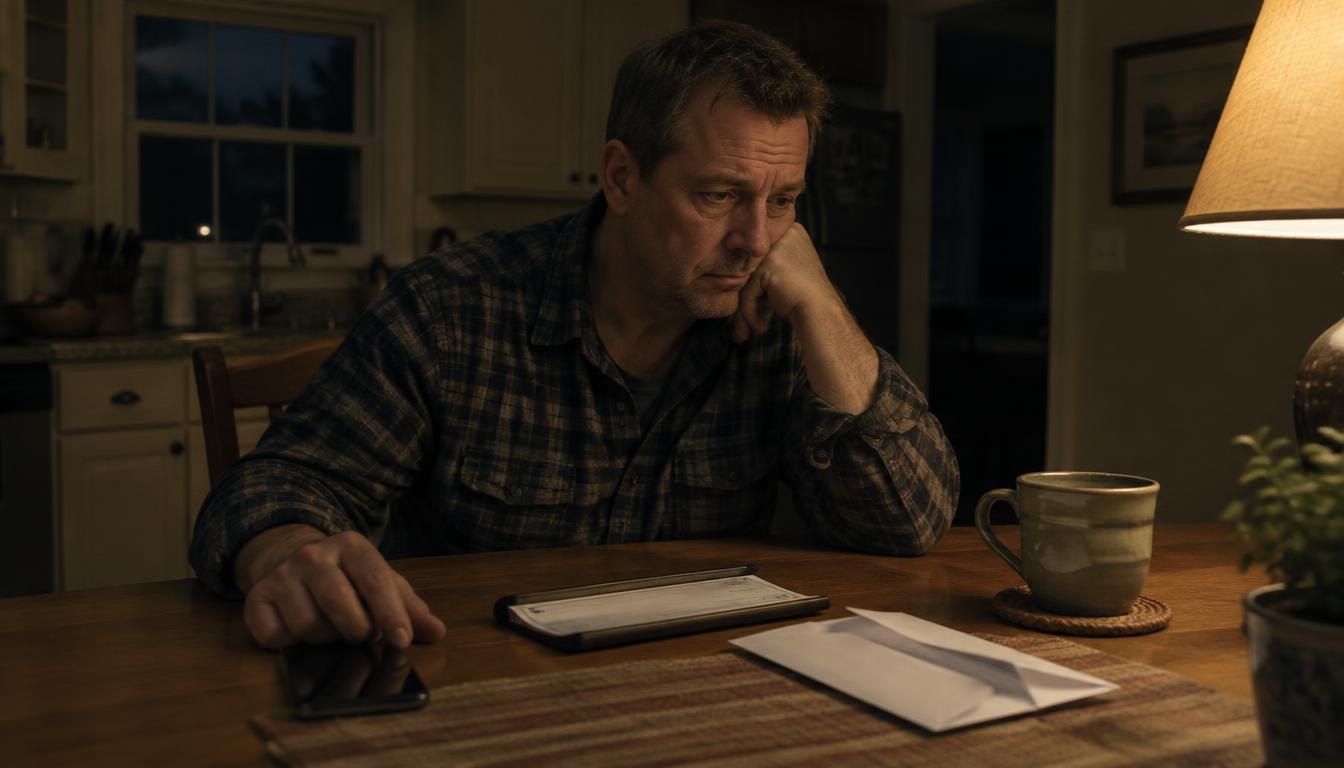
I was very good at borrowing money. I want to say that up front, because I'm about to talk about families who keep handing cash to someone in active addiction, and I'm not looking down from some high place. I was the guy on the other end of that phone call.
It was never for drugs. It was for rent. A car payment. A tow fee I made up on the spot. The people who loved me wanted to believe the stories as much as I did, and a strange little ritual formed: I'd ask, they'd sigh, the money would move, and we'd both call it a loan. Nobody expected it back. That was the unspoken part.
Twenty-plus years later, I watch that same ritual from the other side of the couch. So let's talk about giving money to an addicted loved one: why it happens, what it funds, and how to stop without abandoning the person you love.
Why Do Families Keep Giving Money to an Addicted Loved One?
Families keep giving money because it's the fastest way to make a terrifying feeling go away. The request usually arrives attached to a crisis, and paying feels like preventing something worse. It isn't generosity that keeps the pattern alive. It's fear.
Here's what I see over and over. The call comes late. The voice is scared, or angry, or unusually sweet. There's a deadline: the landlord, the impound lot, the phone getting shut off. And there's an implied consequence if you say no, spoken or just hanging in the air.
In that moment you aren't making a financial decision. You're making a safety decision, with incomplete information, at 11 p.m. Nobody decides well under those conditions. Addiction knows that. It engineers them.
There's a quieter reason too. Money is one of the few things families can still control. You can't control whether they use or go to treatment. But you can wire $400, and for a few hours it feels like you did something. I understand that feeling. It's still a trap, and it's one of the clearest forms of enabling addiction I see in families.
What Does the Money Actually Pay For?
Even when the money goes exactly where they said it would, it still pays for the addiction. Every dollar you spend on their rent is a dollar they don't have to, which frees up their money for using. Addiction understands this better than families do.
Families get stuck arguing about whether the story was true. Was there really a tow? It doesn't matter. If you pay the electric bill, you've made it possible to keep using with the lights on. You didn't buy drugs. You bought the conditions under which drugs stay affordable. That's not a character flaw. It's math.
The most expensive thing the money buys is one more day of not having to look at their life. Consequences are how people in addiction find the floor. Every check you write moves the floor a little further away.
The Loan That Was Never a Loan
Calling it a loan lets everyone avoid what's really happening. The word protects the giver from feeling like an enabler and the receiver from feeling like a dependent. Nobody keeps a ledger. The word is doing emotional work, not financial work.
I've asked hundreds of families a simple question: how much have you given over the years? Most can't answer, because they've never let themselves add it up. When they do, the number is almost always shocking. Ten thousand. Forty thousand. Well into six figures, from parents who thought of themselves as people who "help out sometimes."
Hard truth, said plainly: if you wouldn't lend this amount to a stranger with the same track record, it isn't a loan. It's a gift you're ashamed of. And the shame keeps you from stopping, because stopping means admitting what the last ten years of "loans" really were. That admission is painful. It's also the beginning of your recovery, not just theirs.
How Do You Stop Giving Money Without Abandoning Them?
You stop funding the addiction while staying fully available to the recovery. Those are two different things, and the whole skill is telling them apart. No to cash. Yes to treatment, rides to meetings, a midnight phone call, and a seat at the table when they're ready. That's the heart of setting boundaries with an addicted loved one.
Some practical ground rules that hold up under pressure:
- Decide before the phone rings. Make the decision now, calmly, with your spouse or a trusted friend, and write it down.
- No cash, ever. If there's a real bill, pay the landlord or pharmacy directly, after verifying it yourself. Even that should be rare and tied to a conversation about treatment.
- Say the sentence once and stop. "I love you, and I'm not going to give you money anymore. I will help you get help." Explanations become negotiations.
- Expect the pushback to get louder before it stops. Anger, guilt, silence, a sudden crisis. Escalation isn't proof you're wrong. It's proof the pattern is being interrupted.
- Get support for yourself the same week. This is hard to hold alone, and you weren't designed to.
The most common objection: "But what if something happens to them?" I take that seriously. There is risk. But after two decades of watching this, I can tell you the risk of continuing to fund active addiction is not smaller. It's just slower and easier to look away from. If you're considering bringing in help, here's what to expect when you call an interventionist.
What Changed for Me When the Money Stopped
The money stopping didn't get me sober. But it took away the scaffolding that let me keep pretending. When people stopped covering the gaps, the gaps became visible, to them and to me. Consequences aren't punishment. They're information.
I wasn't grateful in the moment. I was furious, and I said things I've spent years making amends for. Then, without the cushion, I ran out of road faster than I would have otherwise. That's the point. Faster is mercy, even when it doesn't feel like it.
If you've been giving money to an addicted loved one for years, I'm not here to shame you. You were trying to keep someone alive with the only tool you had. I'm asking you to consider that there's a better tool, and the first step toward it is putting the checkbook down.
You can love someone completely and still refuse to fund the thing that's killing them. In fact, at some point, that refusal is the love.
Related Reading
If this hit close to home, you're not the only family sitting with a stack of "loans" and a knot in your stomach. Listen to The Party Wreckers podcast, where I talk about this every week. And if you're ready to stop paying for the problem and start paying for the solution, reach out at FreedomInterventions.com.