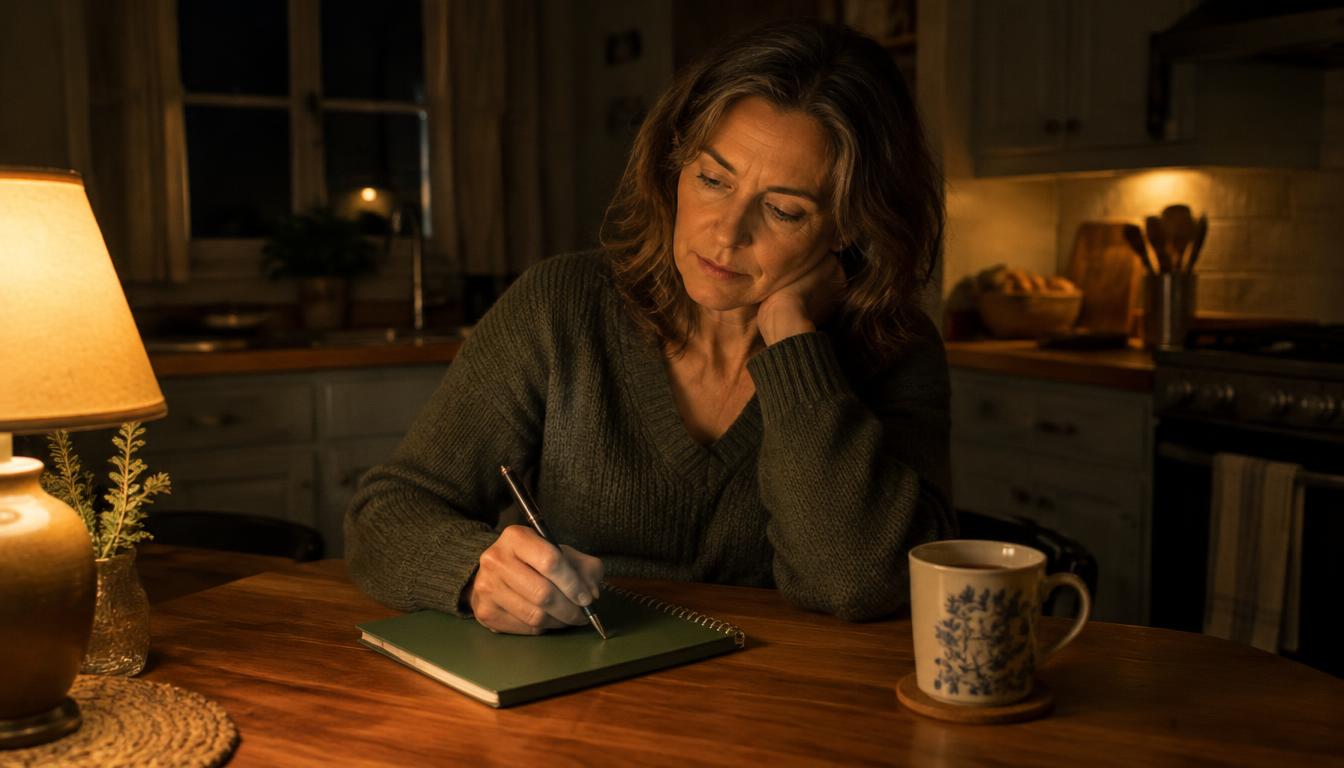
A few years ago, a mother sat across from me at her kitchen table and slid a green spiral notebook toward me. "I don't know if this helps," she said. "I just started writing things down." She didn't know it yet, but documenting a loved one's addiction was the smartest move she'd made all year.
It held fourteen months of entries. Dates. A missed Thanksgiving. Four hundred dollars gone from her purse. A 2 a.m. phone call where her son was slurring so badly she couldn't understand him. In more than 20 years of doing interventions, that notebook is still one of the most useful things a family has ever handed me. Not because it was dramatic. Because it was true.
That's why writing it down is one of the first things I ask families to do. It costs nothing, it takes five minutes, and you can start tonight.
I also know what that notebook would have looked like about me. My family didn't keep one. If they had, it would have been awfully hard for me to argue with. And believe me, back then I argued with everything.
What Does Documenting a Loved One's Addiction Actually Mean?
It means keeping a simple, private, dated record of what you see, what happens, and how it affects you. It's not a case file and it's not a surveillance log. It's just facts, written down close to when they happen.
Think of it as a weather report instead of a diary. You're not writing your feelings into ten pages of prose (though you can do that somewhere else, and it might help). You're noting what happened, when, and what it cost.
Why Should Families Write Down What's Happening?
Because memory bends toward hope, and addiction bends the truth. A written record keeps you anchored to what actually happened, not what you were told happened or what you wish happened.
Your memory is working against you
Families living with addiction run on hope, and hope edits. One good week can quietly erase a terrible month. I've had parents tell me "it's not that bad lately," then open their notes and find three incidents in ten days. They weren't lying to me. They were exhausted, and exhausted people forget.
The addiction is working against you too
"That's not what happened." "It was one time." "You're exaggerating." I said all of those, and I said them with total confidence. In active addiction, I was a master of revisionist history. A dated entry doesn't get into a debate. It just sits there being accurate.
It helps the people trying to help you
When you call an interventionist, a treatment center, or a family therapist, the first questions are about patterns. How long? How often? What's changed? A record turns "I don't know, it's been a while" into real answers, and real answers lead to the right level of care.
What Should I Write Down When Documenting a Loved One's Addiction?
Write down dates, specific behaviors, consequences, and your own reactions. Keep each entry short and stick to what you saw or heard yourself.
- The date and time
- What you saw or heard, described plainly: "slurred speech and smelled of alcohol at 4 p.m." instead of "he was a mess"
- Substances, bottles, or paraphernalia you came across
- Money that went missing, was borrowed, or can't be explained
- Missed work, school, family events, or court and legal letters
- Promises made, like "I'll stop after the holidays"
- Safety concerns: driving impaired, nodding off, overdose scares
- How it affected you, your kids, or others in the house
A real entry can be this simple: "Oct 12, 9:40 p.m. Came home two hours late, said traffic. Eyes pinned, couldn't finish sentences. Our daughter asked if Dad was sick. I didn't sleep." That's it. That's a powerful sentence.
How Do I Keep a Record Without Becoming the Addiction Police?
Write down what crosses your path; don't go hunting for it. The point is clarity for you, not a weapon and not a second full-time job. If you've already been monitoring an addicted loved one around the clock, this is the healthier version of that instinct.
- Keep it private and secure: a notebook somewhere safe, or a locked notes app on your phone.
- Never read it aloud in the middle of a fight. It's not ammunition.
- Write the good days too. Honesty cuts both ways, and it keeps you fair.
- Cap it at five minutes. If it's taking an hour, it's taking over.
Here's my self-aware moment: if you catch yourself checking his car mileage at midnight, you don't need a better notebook. You need support for you. That's not a failure. That's information.
What Do I Do With the Record Once I Have It?
Read it back after two or three weeks. Most families see a pattern they couldn't see while living inside it, and that pattern is usually the push they needed to ask for help.
- Read it in one sitting, start to finish.
- Circle what repeats: the same excuses, the same days, the same consequences.
- Bring it to your first call with a professional. You'll be amazed how much clearer that conversation gets.
- If an intervention happens, use it to write your letter. Specific, loving examples land in a way that general worry never does.
One important note: if someone is in danger right now, don't write it down. Call 911.
You Don't Need a Plan. You Need a Pen.
That mom's son went to treatment. At his intervention, her letter was built from that green notebook, and later he told me something I'll never forget: "I could argue with how she felt. I couldn't argue with the dates."
You don't have to have it all figured out tonight. You don't have to know what you'll say or when you'll say it. Start with one honest line on one page. That line is the beginning of the end of guessing, and the beginning of doing something.